Feb. 1, 2013 ? On July 18, 2012, a fairly small explosion of light burst off the lower right limb of the sun. Such flares often come with an associated eruption of solar material, known as a coronal mass ejection or CME -- but this one did not. Something interesting did happen, however. Magnetic field lines in this area of the sun's atmosphere, the corona, began to twist and kink, generating the hottest solar material -- a charged gas called plasma -- to trace out the newly-formed slinky shape. The plasma glowed brightly in extreme ultraviolet images from the Atmospheric Imaging Assembly (AIA) aboard NASA's Solar Dynamics Observatory (SDO) and scientists were able to watch for the first time the very formation of something they had long theorized was at the heart of many eruptive events on the sun: a flux rope.
Eight hours later, on July 19, the same region flared again. This time the flux rope's connection to the sun was severed, and the magnetic fields escaped into space, dragging billions of tons of solar material along for the ride -- a classic CME.
"Seeing this structure was amazing," says Angelos Vourlidas, a solar scientist at the Naval Research Laboratory in Washington, D.C. "It looks exactly like the cartoon sketches theorists have been drawing of flux ropes since the 1970s. It was a series of figure eights lined up to look like a giant slinky on the sun."
More than just gorgeous to see, such direct observation offers one case study on how this crucial kernel at the heart of a CME forms. Such flux ropes have been seen in images of CMEs as they fly away from the sun, but it's never been known -- indeed, has been strongly debated -- whether the flux rope formed before or in conjunction with a CME's launch. This case shows a clear-cut example of the flux rope forming ahead of time. Vourlidas is a co-author, along with Spiro Patsourakos and Guillermo Stenborg, of a paper on these results published in the Astrophysical Journal on Jan. 31, 2013.
Spotting such a foreshadowing of a CME could help scientists develop ways to predict them, says Dean Pesnell, the project scientist for SDO at NASA's Goddard Space Flight Center in Greenbelt, Md. "By telling us when and where flux ropes will erupt," Pesnell says. "SDO helps us predict a major source of space weather."
Scientific research is always a dance between hypothesis and experimental confirmation, and the history of the flux rope is no exception. Plasma physicists suggested that such coils of magnetic field lines were at the heart of flares in the 1970s and spacecraft near Earth provided in-situ measurements that occasionally traced out helical structures inside CMEs. Later, the flux ropes were spotted in images of CMEs captured by the joint ESA/NASA Solar Heliospheric Observatory (SOHO) -- which launched in 1995 -- using the mission's Large Angle and Spectrometric Coronagraph (LASCO), a telescope that blocks out the bright light of the solar disk in order to better see the tenuous corona around it. They are now a regular appearance on coronagraph and heliospheric imaging observations.
When it came to watching them form in a CME, however, the task was much harder. Since CMEs can form quite suddenly -- known as impulsive CMEs -- the associated flux ropes are smaller and closer to the surface, making it difficult to spot them amongst the many structures in the corona.
In the absence of direct observational evidence, theorists have produced two theories based on general physics of plasmas and magnetic fields of how and when the flux rope might form. In one, the magnetic structure of the rope exists before the CME, and as it evolves over time it twists and kinks becoming increasingly unstable. Eventually it erupts from the sun, releasing enormous amounts of energy and solar plasma. In the second version, the CME erupts when looping magnetic field lines are severed from the sun's surface. While the great blob of solar material streams off the sun, the fields reconnect with each other to form a classic flux rope shape.
"In this case, we saw this big eruption on July 19," says Vourlidas. "We wanted to analyze the eruption and we started going back in time -- a few minutes, then an hour, then eight hours. And then we saw it. A flux rope that looked just like the cartoons scientists have been drawing for decades."
Vourlidas credits this first sighting to three things. First, the team looked far enough back in time, when previous searches have often only looked a few minutes back. Second, the sun obliged its viewers with the perfect angle at which to see the tell-tale loops of the flux rope. SDO's cameras could look right down the center of the rope, like looking down the tunneled center of a slinky. Third, AIA's cameras capture imagery that no other cameras do: light at the 131 Angstrom wavelength, which shows solar material heated to temperatures of 10,000,000 K (18,000,000 F / 10,000,000 C). In images of the same region at the same time showing cooler material, the flux rope doesn't show up at all. AIA scientists chose to include a filter to view this unprecedentedly high temperature because they posited that flares could heat the corona to those temperatures. Apparently the same incredibly hot plasma helped highlight the flux rope that would later give rise to a CME.
Over the course of the next eight hours after the July 18 flux rope formed, the rope did show up faintly in images of cooler material, suggesting that the hot material from the flare cooled down over time as the flux rope also rose in space. Then eight hours later, on July 19, the material got hot again, the region flared, and the flux rope escaped into space.
"We could verify that the flux rope was there in the coronagraph from SOHO. We could see the typical slinky structure with multiple round loops inside it," says Vourlidas. "We looked at it with other NASA telescopes, too. We looked at it with everything we've got. It's a wonderful time to be a solar physicist, because thanks to the large number of telescopes we have in space at the moment, we can see things like this from every angle."
Vourlidas says that images from NASA's Solar Terrestrial Relations Observatory (STEREO) also helped with analysis. Since the two STEREO spacecraft observe the sun from a different perspective than does SDO, the team got a top-down view of the flux rope with STEREO-A's EUV Imager, which helped unravel the 3-D structure of the flux rope. The foot points of the rope touched in widely separated areas of the solar surface -- an interesting structural development in of itself that is worth further study.
The team will certainly look for other examples in the images of the hottest plasma, searching for evidence of pre-formed flux ropes further back in time. But even one such example of direct evidence adds an important step to the constant scientific cycle of theory and observation, helping refine and improve the theories of what causes these giant explosions on the sun.
For more information about NASA's SDO mission, visit: www.nasa.gov/sdo
For high resolution versions of this media, visit: http://svs.gsfc.nasa.gov/vis/a010000/a011100/a011180/
Share this story on Facebook, Twitter, and Google:
Other social bookmarking and sharing tools:
Story Source:
The above story is reprinted from materials provided by NASA.
Note: Materials may be edited for content and length. For further information, please contact the source cited above.
Note: If no author is given, the source is cited instead.
Disclaimer: Views expressed in this article do not necessarily reflect those of ScienceDaily or its staff.
Source: http://feeds.sciencedaily.com/~r/sciencedaily/most_popular/~3/k7EPC4ymbr0/130201092746.htm
Lark Voorhies Jennifer Livingston Orlando Cruz MLB Playoff Schedule arizona cardinals Big Bird Adam Greenberg

 Peter Davis is a model, actor, and has worked in finance. He also once worked in finance, and appeared on an Asian television show called, "Hot Guys Who Cook." In addition to those roles, Davis will take his 5-1 record to One FC 7 this weekend, where he will fight Leo Krishna in Kuala Lumpur.
 like Dave Silverman, Abbie Smith, Hemant Mehta, and some bald guy with a great tie. This summer looks even bigger, with Lawrence Krauss, Dale McGowen, and Sean Faircloth already announced to appear.
 little closer to me is Wichita, Kansas, home to the Skeptics of Oz conference. This will be the third year, and last year it was headlined by Phil ?Bad Astronomer? Plait. The line up of speakers and events looks fantastic this year, so I thought I would share (full disclosure ? I?m one of the speakers).
 I?m happy to say that I was asked to come speak at the SoOz this year, and am kicking things off at 9:30 am on Saturday. In case you don?t know who I am (and really, if you?re reading this you should have a tiny clue, but nonetheless), I am a clinical psychologist, professor, researcher, and author. I am also a member of CFI?s Speakers Bureau, a contributor to the Skepticism 101 project, and a bit of a skeptical activist. I?m going to be giving an introduction to how to think scientifically about any topic, helping you hone your critical thinking skills.
 JT Eberhard is the author of the popular blog What Would JT Do?, and has been a contributing author to AtheismResource.com. Before joining the SSA, JT was most known as a debater on atheism and LGBT rights and as the co-founder of the Skepticon annual conference?.JT joined the Secular Student Alliance in January 2011 as their first high school specialist.? Previously, the SSA had allowed high schools to affiliate, but JT was hired to build a high school program that catered to the specific needs of teenage activists.? In his time at the SSA the number of high school groups grew over 400%.
 Former pastor, current atheist Teresa McBain will take the stage next to talk about her journey from being an evangelical minister to working for American Atheists and now heading up the Humanists of Florida Association. Teresa was also the first female graduate of the Clergy Project, and I was privileged to share the stage with her at FreeOK last year. She?s an engaging, entertaining speaker and had people giving her a standing ovation there.
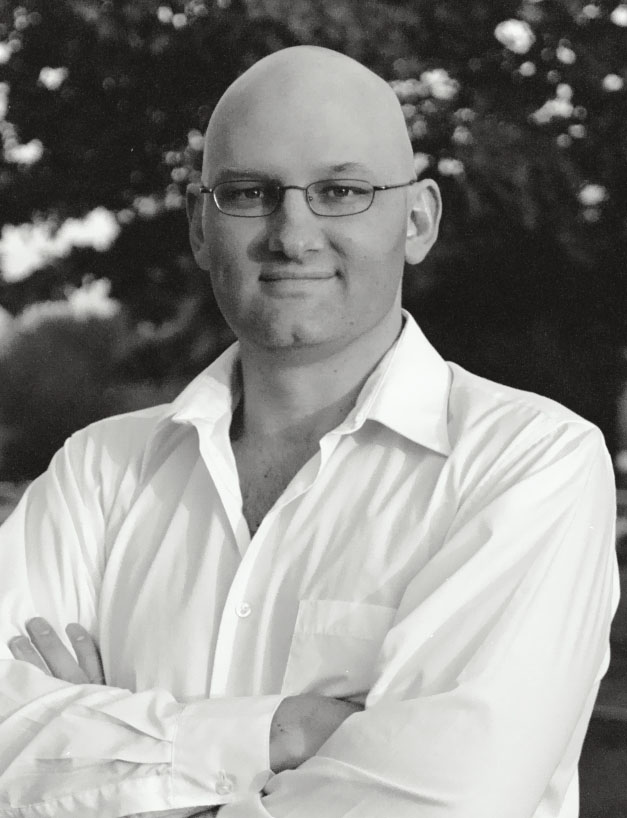 Radford is deputy editor of Skeptical Inquirer science magazine and a Research Fellow with the non-profit educational organization the Committee for Skeptical Inquiry. He has written hundreds of articles on a wide variety of topics, including urban legends, the paranormal, critical thinking, and media literacy?.Radford is one of the world?s few science-based paranormal investigators, and has done first-hand research into mysterious phenomena in sixteen countries on four continents including psychics, ghosts and haunted houses; exorcisms, miracles, Bigfoot, stigmata, lake monsters, UFO sightings, reincarnation, and crop circles, and many other topics. He is perhaps best known for solving the mysteries of the Santa Fe Courthouse Ghost in 2007, and the Hispanic vampire el chupacabra in 2010.
 Ray is the founder of Recovering From Religion, as well as the author of four books, two on organizational team issues as well as The God Virus: How Religion Infects Our Lives and Culture and Sex and God: How Religion Distorts Sexuality. He has been a psychologist for over 30 years, practicing counseling and clinical psychology for 10 years then moved into organizational psychology and consulting. He has been a student of religion most of his life and holds a MA degree in religion as well as a BA in Sociology/Anthropology and a Doctorate in psychology.
 D.J. Grothe is President of the James Randi Educational Foundation, the international educational non-profit founded by celebrated social critic and activist James Randi. Grothe has lectured widely on topics at the intersection of education, science and belief at universities such as Stanford, Harvard, Yale, UCLA, UC Berkeley, and dozens of others. Formerly a professional magician, he has special interests in the psychology of belief and processes of deception and self-deception.
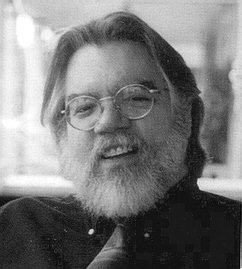 Professor of Theology and Scriptural Studies, Colemon Theological Seminary
